Bridging the Distance: Practical Strategies for Researchers Who Want Their Work to Shape Public Policy
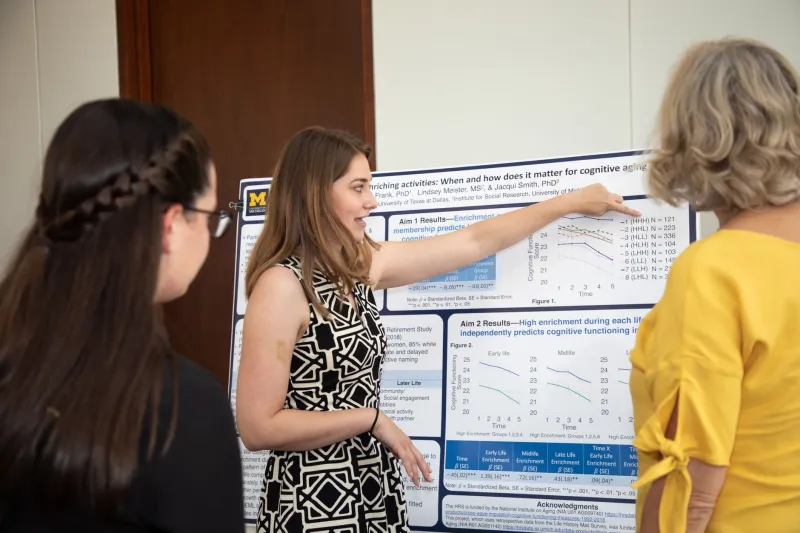
The problem is not that American policymakers lack access to scientific expertise. Congressional offices maintain relationships with the National Academies of Sciences, Engineering, and Medicine. Federal agencies employ staff scientists and consult extensively with external advisors. State health departments routinely commission research to inform regulatory decisions. The infrastructure for science-informed governance exists.
The problem is that most working researchers — particularly those outside elite institutions with established policy networks — have no clear pathway into that infrastructure. The distance between a published finding and a policy outcome is real, and it is rarely bridged by the quality of the science alone.
Why the Gap Persists
The structural mismatch between academic research and policy development begins with time. The peer review process operates on a timeline measured in months or years. Legislative and regulatory processes operate on timelines measured in weeks, and often respond to political moments that cannot be anticipated. By the time the most rigorous evidence is available, the window for influencing a specific policy decision may have already closed.
Language compounds the problem. Academic writing is optimized for disciplinary audiences. It hedges conclusions carefully, qualifies findings extensively, and situates results within dense bodies of prior literature. These are virtues in a scientific context. In a policy context, they can render findings nearly inaccessible to staff members who need to understand the bottom line in two paragraphs or less.
There is also an institutional culture gap. Many research universities, particularly those with strong emphasis on basic science, have historically treated policy engagement with ambivalence — viewing it as a distraction from scholarly work rather than an extension of it. Promotion and tenure systems that weight publications heavily and service activities lightly provide little incentive for researchers to invest in the slow, relationship-dependent work of policy engagement.
Finally, there is the matter of credibility maintenance. Researchers who engage visibly with policy debates risk being perceived by colleagues as advocates rather than scientists — a distinction that carries significant professional consequences in fields where perceived objectivity is a form of currency.
Case Studies in Successful Engagement
Despite these barriers, a number of researchers have developed models for effective policy engagement that are worth examining closely.
Public Health and Federal Rulemaking
During the development of federal air quality standards, a coalition of environmental health researchers at universities across the Midwest organized a coordinated response to the EPA's public comment process. Rather than submitting individual technical comments — which are frequently overlooked — they produced a joint synthesis document written explicitly for non-specialist readers, summarizing the state of evidence on particulate matter exposure and cardiovascular outcomes. They also arranged briefings with agency staff scientists, establishing relationships that extended beyond the single rulemaking cycle. The result was not only a more evidence-informed final rule, but a set of ongoing institutional relationships that have continued to channel research findings into regulatory processes.
State-Level Technology Policy
A team of computer scientists and legal scholars at a research university in the mid-Atlantic region sought to influence state legislation governing algorithmic decision-making in public benefits administration. Rather than waiting to be consulted, they proactively reached out to legislative staff, offered to provide technical assistance at no cost, and produced a one-page summary of their research findings tailored specifically to the legislative context. They were eventually invited to testify before a state legislative committee — not because their research was uniquely distinguished, but because they had made themselves available, legible, and useful.
Climate Science and Local Government
Several climate researchers affiliated with land-grant universities have developed productive partnerships with county and municipal governments that lack in-house scientific capacity. By positioning themselves as resources rather than advocates — providing technical assistance on climate risk assessments, reviewing local adaptation plans, and training local staff — they have created sustained channels for research to inform infrastructure and land-use decisions at the local level. This model bypasses the gridlock that often characterizes federal and state policy processes while producing tangible, if smaller-scale, policy impacts.
Actionable Strategies for Researchers
The case studies above share several common features that researchers seeking policy engagement can adapt to their own circumstances.
Invest in translation before translation is needed. Researchers who wait until a policy opportunity arises to develop their communication skills and relationships are almost always too late. Writing accessible summaries of research findings, maintaining a plain-language research summary on a professional website, and practicing the discipline of articulating a finding's significance in two sentences are habits that pay dividends over time.
Identify the relevant decision-making nodes. Federal agencies, congressional committees, state legislatures, and local government bodies each have distinct processes for incorporating external expertise. Understanding which body has jurisdiction over the policy questions your research addresses — and how that body typically receives and uses technical input — is prerequisite knowledge for effective engagement.
Build relationships with policy intermediaries. Science policy organizations, think tanks, and professional associations often serve as connective tissue between researchers and policymakers. Establishing relationships with these organizations — through publications, conference participation, or direct outreach — can provide both a platform and a translator.
Engage with the public comment process. Federal rulemaking is legally required to accept and consider public comments, including technical submissions from researchers. This is an underutilized channel for scientific input that requires no prior relationship with agency staff and is open to any researcher with relevant expertise.
Document your engagement as scholarship. An increasing number of journals and funding agencies recognize policy engagement as a legitimate form of scholarly impact. Framing policy-relevant work in terms of its real-world applications from the outset — in grant narratives, in publication abstracts, and in annual reports — can help build an institutional record that supports continued engagement.
Reclaiming the Researcher's Role
The demand for evidence-based governance is not a recent phenomenon, but it has become more acute as policymakers confront challenges — in public health, environmental management, and technology regulation — that are genuinely difficult to navigate without scientific expertise. The question is not whether researchers have something to contribute to these conversations. The question is whether the research community will develop the institutional habits and individual skills necessary to contribute effectively.
Scholars at institutions affiliated with collaborative research networks are particularly well positioned to leverage collective expertise in policy contexts. Coordinated research voices carry more weight than individual submissions, and organizations that can convene researchers across disciplines and institutions provide a structural advantage that individual scholars cannot replicate on their own.
The distance between a laboratory finding and a policy outcome is real. But it is not fixed. It shrinks in proportion to the deliberate, sustained effort of researchers who understand that scientific knowledge, to fulfill its promise, must ultimately inform the decisions that shape how people live.